

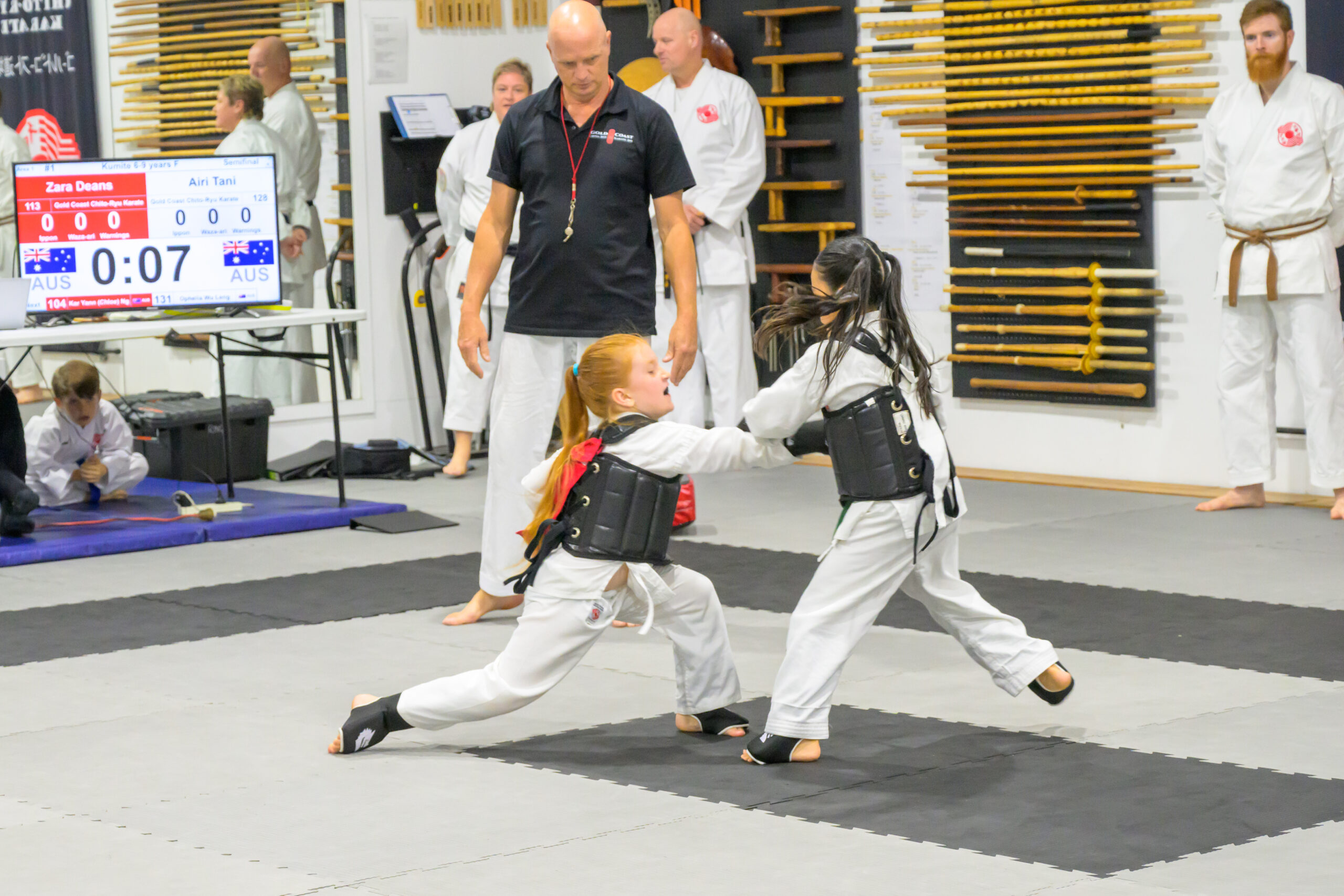
Dear Parents,
As we approach the Gold Coast Cup, I want to speak to you not just as an instructor, but as someone who has spent decades on the dojo floor, watching young students grow into capable, confident adults.
I want to ask you something important:
What kind of children do we want to raise?
Do we want children protected from pressure…
Or children who learn how to handle it?
Do we want children who avoid failure…
Or children who learn how to fall, adapt, and rise again?
Because that is what this journey is really about.
Karate is more than an activity.
It’s more than movement, uniforms, or belts.
Karate is the moment your child stands on the tatami—
Facing an opponent,
Facing their nerves,
Facing the result of their effort.
And it is in that moment that real growth happens.
In the lead-up to competition, I often hear:
“He’s not competing, he has school.”
“She’s not competing, she’s not ready.”
“They’ll do it next time.”
I understand these concerns. Truly.
But here is the reality:
A child will never feel “ready” if they are taught to step away from challenges.
Competition does not harm a child.
Avoiding challenge does.
I know there are fears:
Fear of injury.
Fear of losing.
Fear of disappointment.
But more often than not, it is not the child who is afraid—
It is the adult.
And children take their cues from us.
On the dojo floor, we are not building champions overnight.
We are building character.
Through competition, your child learns:
– How to manage their emotions
– How to face fear
– How to accept both winning and losing
– How to show respect under pressure
– How to take responsibility for their performance
These lessons cannot be taught through words alone.
They must be experienced.
Without challenge, karate risks becoming just exercise.
And that is not what we do here.
A belt is not a reward for attendance.
It represents effort, growth, and the willingness to step forward when it matters.
That is why participation—especially in events like the Gold Coast Cup—is such an important part of the journey.
Not as pressure.
Not as punishment.
But as a standard.
Because we cannot teach courage while allowing avoidance.
And we cannot build strong character inside a comfort zone.
So I leave you with this:
When your child faces life outside the dojo—
A tough exam, a job interview, a setback, or a challenge—
Will they step forward with confidence…
Or step back to avoid it?
In the dojo, they have a safe place to learn this.
With guidance.
With structure.
With support.
I choose to teach them to face challenges.
And together, we can give them the opportunity to grow into the kind of people we all want them to become.
— Sensei Adam Higgins
Gold Coast Chito-Ryu Karate
